
North Carolina has successfully routed live 911 calls across state lines using its Emergency Services IP Network (ESInet), marking a significant milestone for Next Generation 911 (NG911) technology and reaffirming the state’s leadership in resilient emergency communications.
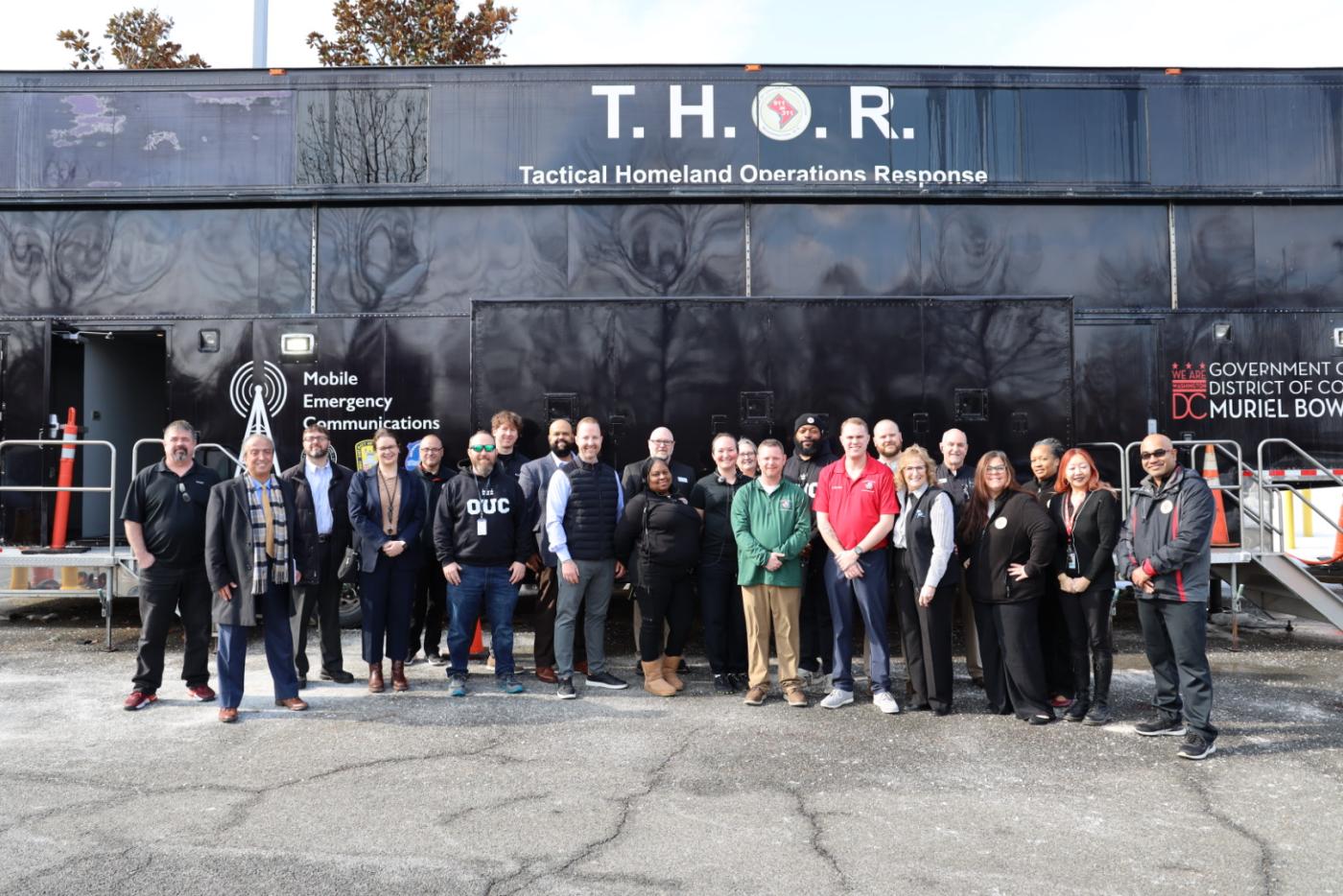
In a first-of-its-kind proof of concept, the N.C. 911 Board partnered with the Washington D.C. Office of Unified Communications (OUC), AT&T, and Johnston County 911 to deliver 911 calls to Tactical Homeland Operations Response (THOR), a mobile communications command center located in the nation’s capital. During the exercise, real 911 calls originating in Johnston County were securely routed through North Carolina’s ESInet to Washington, D.C., where Johnston County telecommunicators answered calls inside THOR and relayed critical information back to Johnston County, N.C. for dispatch.
The successful demonstration validated policy-based call routing, seamless interoperability, and continuity of operations across state borders. These capabilities will strengthen emergency response during natural disasters, cyber incidents, and large-scale events.
This proof of concept not only confirms the advancements Next Generation 911 has brought to North Carolina but also validates the system's reliability and potential for nationwide interoperability, said Pokey Harris, Executive Director of the N.C. 911 Board. “We have created a contingency-planning approach for PSAPs in North Carolina. Other states can adopt these capabilities, but federal funding is essential for implementing Next Generation 911 across the country. We appreciate the efforts of the Washington D.C. Office of Unified Communications, Johnston County Emergency Communications, and our vendor partners in turning this proof of concept into reality.”
The proof of concept also confirmed alternative data delivery methods, including integration with internal CAD systems, Collaborator by RapidSOS, and enhanced Push-to-Talk radios using AT&T FirstNet, T-Mobile, and Verizon Wireless data connections. These redundant pathways strengthen contingency planning and ensure emergency communications remain operational when traditional systems are disrupted.
North Carolina’s ESInet has already demonstrated real-world reliability. During Hurricane Helene, emergency calls from impacted communities were successfully delivered to partner Public Safety Answering Points (PSAPs) across the state, ensuring uninterrupted service for residents in need. Extending these capabilities beyond state lines positions North Carolina as a national model for NG911 innovation and collaboration.
“This exercise highlights how innovation and technology can save lives, demonstrating that geography is no longer a barrier,” said Teena Piccione, North Carolina 911 Board Chair and Secretary of the North Carolina Department of Information Technology. “North Carolina’s ESInet enables us to transmit calls, data, and expertise to where they are needed most, ensuring community protection even in tough situations. Public safety relies on preparedness, partnerships, and advanced technology, and this success shows what can be achieved when states, local agencies, and industry work together with a common goal.”
For more information about the N.C. 911 Board and its initiatives, visit the Next Generation 911 website.
###
For more information about the N.C. Department of Information Technology, visit https://it.nc.gov or follow us on X, Instagram, Facebook, LinkedIn, YouTube and Flickr.