
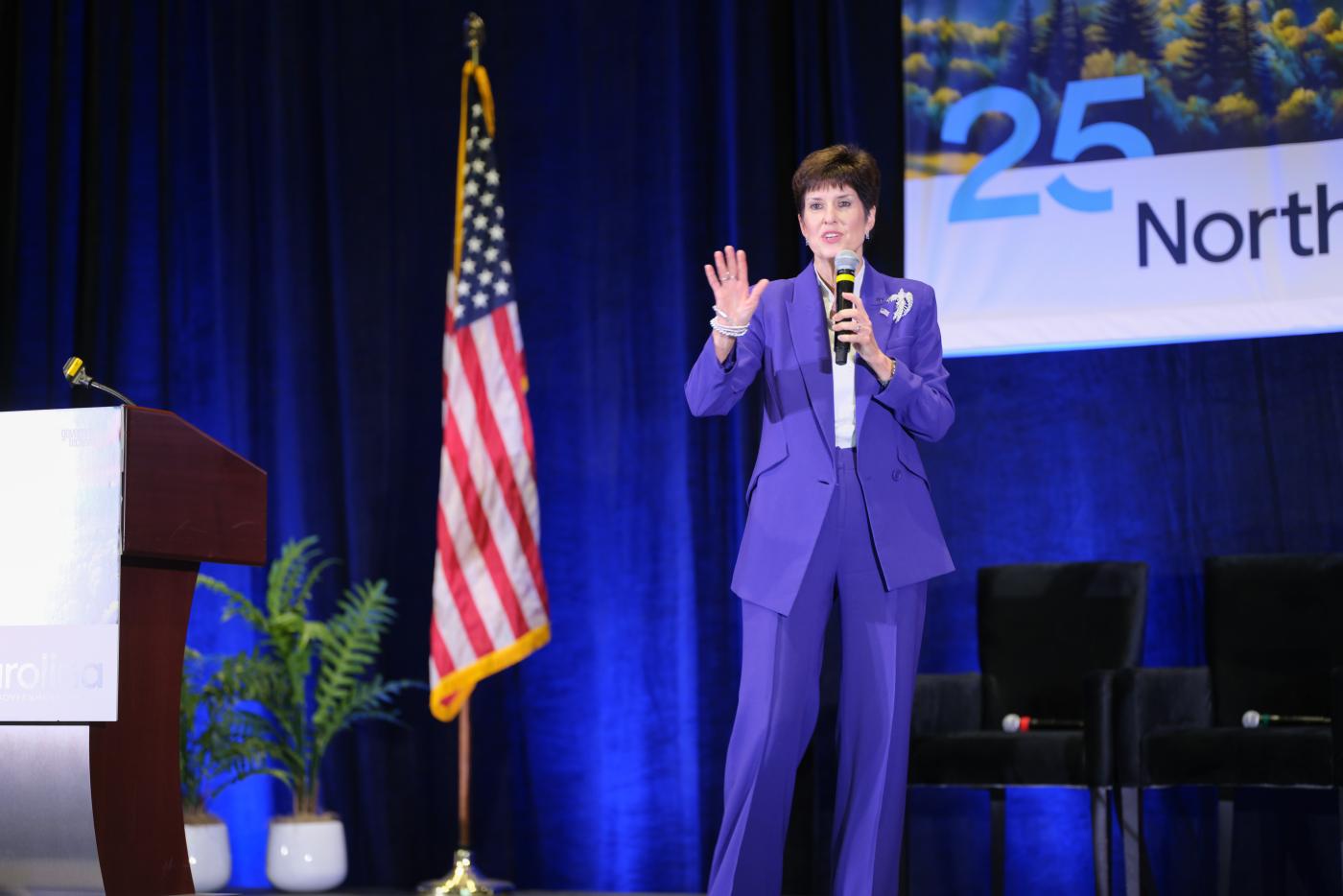
The N.C. Department of Information Technology (NCDIT), under the leadership of first-year Secretary and State Chief Information Officer Teena Piccione, finished 2025 as a national leader in technology modernization, following the successful implementation of sweeping initiatives that expanded broadband access, advanced trustworthy artificial intelligence (AI) governance, reduced procurement timelines and strengthened cybersecurity protections across the state.
“Over the past year, my team and I have diligently worked to address a wide range of challenges within our state’s tech environment,” Piccione said. “Our focus for 2025 was to build stronger foundations in several key areas of the department. Overall, I’m proud of the progress our team made in 2025 and look forward to raising the bar in 2026.”
The expansion of AI in state government has been a success, with North Carolina’s standing in AI expertise rising from 36th to 7th in the nation, according to Chadix. The rankings were derived from data across five metrics: AI education, tech hubs, tech jobs, businesses using AI and AI investment. Data was sourced from platforms like U.S. News & World Report (education), Crunchbase (tech hubs), Bureau of Labor Statistics (tech jobs), McKinsey and Deloitte (AI adoption) and government reports (AI investment: NSF, DOE).
In addition to significant advancements in the AI space, Piccione describes the past year in her role as “pivotal” in laying the foundation for significant reductions in IT procurement timelines across state government. Since being confirmed by the N.C. General Assembly in May, she and her team have reduced the time to review and award Requests for Proposals (RFPs) from eight months to eight weeks, a 76% reduction.
“Significantly reducing the time to complete RFPs for state IT procurement was a top priority for us in 2025,” Piccione said. “By focusing on this, we aim to enhance public services, deliver better value to taxpayers, encourage more supplier participation and competition, and eliminate operational inefficiencies. I’m very proud of our team’s efforts in this area, as we had to think beyond traditional government processes to develop a solution that will greatly bolster efficiency and collaboration across agencies. We are just getting started.”
Other Key Highlights in 2025
Trustworthy AI Innovation: I-Sah Hsieh was appointed Deputy Secretary for AI and Policy, the first role in the state dedicated to coordinating statewide artificial intelligence efforts. Following Hsieh's hiring, Governor Josh Stein signed an executive order establishing statewide principles, governance and accountability for AI use across agencies. As a result, NCDIT introduced an AI User Code of Conduct to ensure ethical and transparent practices and created a framework to evaluate potential vendors to ensure they adhere to the guidelines. Governor Stein’s order also launched an AI accelerator program and established a statewide AI council composed of experts from government, academia, industry and other stakeholders to guide standards for trustworthy AI.
“These initiatives enable us to manage the rapidly changing AI landscape in a trustworthy and transparent manner, building trust and accountability in AI deployment,” Hsieh said. “We are laying a foundation that not only addresses today’s AI risks but also positions North Carolina to lead in leveraging AI for public good,” Hsieh said. “Our aim is to ensure innovation benefits and the protection of every community responsibly and transparently.”
Building on 2025’s progress, the state will continue refining assessments and oversight to evaluate AI solutions and strengthen trust in deployment.
Revamping Procurement Systems: Further improvements in the statewide IT procurement process have increased efficiency, helping state agencies acquire technology more quickly to better serve North Carolina residents. For instance, the time to complete Requests for Proposals for state agencies was reduced from 256 days to 62 days through streamlined procedures.
“The progress we’ve made in 2025 is nothing short of remarkable,” said NCDIT Chief Legal and Acquisition Officer Hugh Harris. “NCDIT's focus on improving the infrastructure of core systems and functions has helped pave the way for greater efficiencies that will foster innovation that will elevate the lives of the people of North Carolina and create endless growth opportunities in the future. I am excited to see what the future holds as we continue to work together in this thriving ecosystem.”
Cybersecurity Modernization: NCDIT’s proactive cybersecurity measures included doubling the size of the department’s cybersecurity and risk management program under a new state chief information security officer and publishing North Carolina’s first statewide five-year cybersecurity plan to further strengthen the state’s digital infrastructure and ensure its resilience against threats. One of the six pillars of the plan is workforce development through education, internships, apprenticeships and other opportunities. This effort has led to the successful recruitment of nine cybersecurity interns and created more opportunities for recent college and technical school graduates.
"Our commitment to fostering new talent in the cybersecurity field is evident in our recent partnership with the Carolina Cyber Network to create new internships and apprenticeships that give students real-world experience,” State Chief Information Security Officer Bernice Russell-Bond said. “I'm proud to say that this initiative has already led to the hiring of three cyber apprentices as full-time employees.”
Broadband Deployment: More than 42,000 homes and businesses received access to high-speed internet in 2025 thanks to NCDIT’s grant programs funded by the American Rescue Plan Act. The department plans to connect 210,000 more by Dec. 31, 2026, supported by projects being completed by broadband provider awardees across the state.
“This work highlights our dedication to bringing high-speed internet to all North Carolinians, enhancing education, workforce development, and telemedicine, said Annette Taylor, NCDIT Deputy Secretary for Broadband and Digital Opportunity. “Our ongoing partnerships with broadband providers, local governments and other stakeholders will ensure that no part of our state is left behind in today’s digital world.”
Promoting Collaboration: The N.C. 911 Board made significant progress in public safety by awarding $5.7 million in grants to enhance equipment and facilities for public safety answering points (PSAPs) that handle 911 calls on behalf of North Carolina’s communities. These grants are crucial for emergency response, and the funding will support them in upgrading their technology and operations.
In addition to the annual funding distribution and the grants, more than $3.4 million in reconsideration funding was approved to support PSAPs upgrading their equipment to handle emergency calls more effectively. To enhance interoperability, the board is in the process of programming and distributing enhanced push-to-talk radios to all PSAPs, enabling better communication between agencies.
Looking Ahead to 2026
As we look toward 2026, NCDIT remains committed to advancing digital transformation by harnessing technology to meet evolving needs and drive progress for North Carolinians.
###
For more information about the N.C. Department of Information Technology, visit https://it.nc.gov or follow us on X, Facebook, LinkedIn, YouTube and Flickr.