

Over the next year, North Carolina will host, support, or be connected to several major sporting, entertainment, civic, and international events. These events bring tremendous opportunity and visibility to our state, but they also increase cybersecurity risk because of the volume of people, transactions, vendors, digital systems, and public attention.
High-profile events, especially those with large crowds, national or international attention, and high-value tickets, can create opportunities for cybercriminals to target individuals, organizations, vendors, and supporting infrastructure.
For individuals, common risks may include ticket scams, phishing messages, fake websites, fraudulent QR codes, payment fraud, and attempts to steal personal or financial information. For organizations, venues, and event partners, risks may include DDoS attacks, ransomware, point-of-sale breaches, and attempts to compromise supporting infrastructure, including wired and wireless networks.
We all have a role to play in helping reduce risk. A few simple steps can make a meaningful difference.
Before Attending an Event
- Buy tickets only from official sources or trusted resale platforms.
- Be cautious of ticket deals, giveaways, or last-minute offers that seem too good to be true.
- Use strong, unique passwords for ticketing, banking, email, and social media accounts.
- Enable multi-factor authentication wherever possible.
- Update phones, apps, and devices before you go.
- Be cautious of unexpected emails, texts, or social media messages about tickets, refunds, VIP access, parking passes, hotel deals, or event updates.
During the Event
- Avoid using public Wi-Fi for sensitive transactions, including banking, online purchases, or account logins.
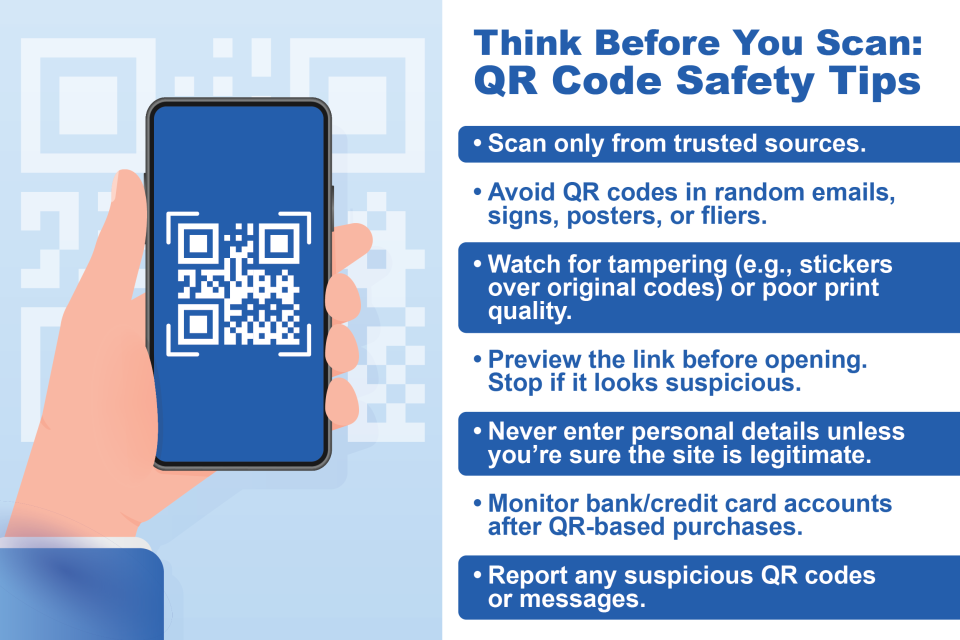
- Do not scan random QR codes. Only use QR codes from trusted sources, such as official event signage, verified websites or known vendors.
- Use mobile payments carefully and avoid entering payment information into unfamiliar websites or apps.
- Be mindful of what you share online. Posting tickets, barcodes, credentials, travel plans, or real-time location details can create unnecessary risk.
- Keep your phone and other devices physically secure.
After the Event
- Monitor bank and credit card accounts for suspicious charges.
- Watch for follow-up phishing scams related to refunds, merchandise, photos, surveys, or future ticket offers.
- Change passwords if you believe an account may have been compromised.
- Do not forward suspicious messages.
By staying alert and practicing good cyber hygiene, we can help protect ourselves, our families, our workplaces, and the people who visit our state.