As North Carolina approaches the 2026 general election, voters will encounter information about candidates, campaigns, and issues across social media, websites, text messages, videos, and other digital platforms.
Some of that content may be created or altered using artificial intelligence (AI), including convincing images, videos, or audio that make it appear as though a person said or did something that never happened. This type of manipulated content, often called a deepfake, could make it look like a candidate gave a speech they never gave or create an audio recording that sounds like a public official's voice.
Not all misleading content involves AI. Real photos and videos can also be edited, taken out of context, or paired with misleading captions.
The good news is that you don't need to be a technology expert to spot and slow the spread of misleading content. A few simple habits can help you pause, check the source, and make sure what you're seeing is accurate before you share it.
Pause Before You Share
AI-generated content can be convincing, so there isn't always one obvious clue that proves something is fake. Instead, focus on the source and the context.
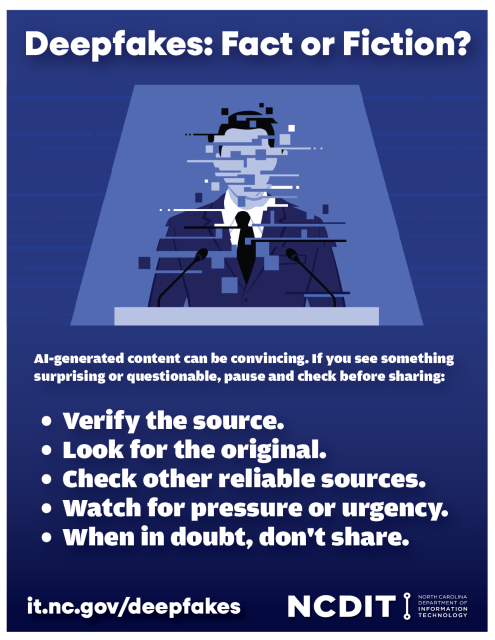
If you see something surprising or questionable, pause and check before sharing:
- Verify the source. Who posted it? Do you recognize and trust the source?
- Look for the original. Find the full video, photograph, or statement. A short clip or screenshot may leave out important context.
- Check other reliable sources. See whether reputable news organizations or official sources are reporting the same information.
- Watch for pressure or urgency. Be cautious of posts designed to make you angry, frightened, or rushed, especially those telling you to "share before it's deleted."
- When in doubt, don't share. If you can't verify content, simply choosing not to share it can help slow its spread. You can also report questionable content using the built-in reporting tools on each social media platform.
Know Where to Turn
For trusted information about voting and elections in North Carolina, visit the North Carolina State Board of Elections.